
Responsible Gambling in Australia: Help and Support
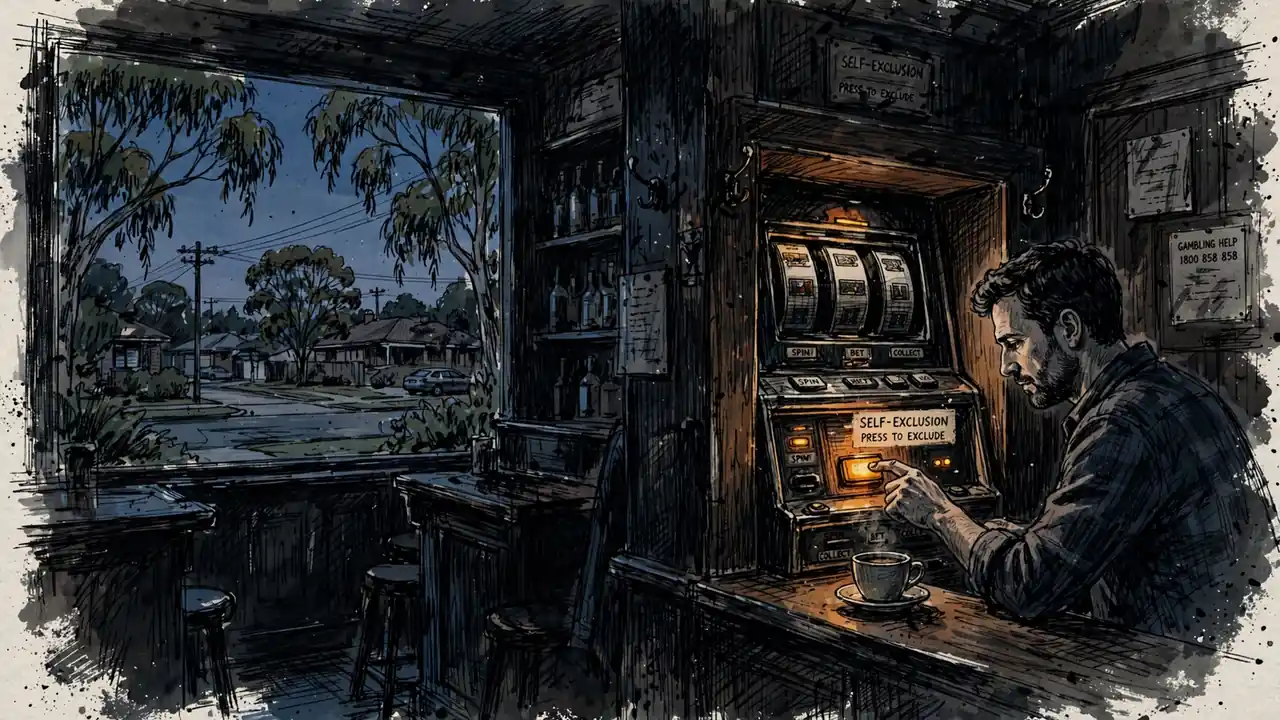
Every country regulates gambling the way it regulates everything else it both disapproves of and profits from: heavily, ambivalently, and with a steady eye on the revenue. Australia is a textbook case. A nation that runs more poker machines per capita than almost anywhere on earth has also produced one of the more elaborate self-exclusion bureaucracies in the world. The contradiction is not hypocrisy, exactly. It is bookkeeping.
One point first, because the law is unambiguous: providing online casino games in Australia is illegal. There is no domestically licensed real-money online casino for Australian players. Licensed Australian operators are limited to sports and race wagering. Offshore casino sites — the ones waving Malta or Curacao documents — hold no licence that authorises them to serve anyone in Australia, and the Interactive Gambling Act 2001 makes that clear. A foreign licence is a licence for somewhere else. It has never been anything more.
How to recognise a problem before it introduces itself
Problem gambling rarely announces itself. It arrives the way most dependencies arrive: dressed as something reasonable. The observable signs are worth listing plainly.
- Gambling is treated as a way to recover losses — the “chase,” which is the point at which a pastime becomes a ledger.
- Time spent gambling is routinely longer than planned, and the plan keeps shrinking.
- Money needed for bills, rent or debts migrates into wagering accounts.
- Borrowing to gamble, or gambling to repay borrowing. The circle closes.
- Concealment: separate accounts, deleted transaction records, vague explanations of where an evening went.
- Irritability or restlessness when trying to cut down.
- Relationships, work or study bend around gambling rather than the reverse.
None of these signs proves anything alone. Two or three together are a signal worth acting on. One further item, stated without decoration: gambling is not a way to earn money. It is priced entertainment with a negative expected return, and no sequence of losses makes the next wager a sound financial decision. Anyone treating it as a solution to money problems is using the wrong tool on the wrong problem.
The machinery Australia built
In 2019 the law changed to allow a national self-exclusion register, and in time it appeared: BetStop, the national register covering online wagering. One registration closes off every Australian-licensed online and phone wagering service in a single step — which is precisely the point, since the whole design of a self-exclusion system is to remove the daily renegotiation with oneself.
The terms tell their own story. BetStop permits exclusions from a minimum of three months up to a lifetime. Around 40 per cent of registrants choose life. Fewer than 20 per cent take the minimum three months. More than 14 per cent have already extended or reactivated their exclusion. Read that again. The majority of people who use the register do not use it casually.
One structural limitation deserves honesty: BetStop does not cover offshore casino operators. An offshore site will not honour an Australian exclusion, which is one more reason offshore sites belong in the category of things not to use.
Alongside BetStop sits the National Consumer Protection Framework for Online Wagering, which applies to all licensed online wagering providers and sets the baseline of consumer protections — activity statements, deposit limits, and the rest of the modern apparatus of regulated vice.
On money: credit cards and cryptocurrency have been banned as deposit methods for Australian online gambling since 11 June 2024. The only legal deposit routes for licensed Australian wagering are debit cards, bank transfer, PayID/Osko and BPAY. A site asking for anything else has already answered a question about itself.
And the age threshold is fixed: the minimum age for commercial gambling in Australia is 18. No exceptions, no operator discretion.
Where to get help — now, not later
This is the part of the page that matters most, so it is not buried in a footer.
Gambling Help Online — free, confidential support, 24 hours a day, seven days a week: https://www.gamblinghelponline.org.au
Gambler’s Help — responsible gambling support: https://www.gamblers.help
BetStop — the National Self-Exclusion Register — register once, exclude from all Australian-licensed online and phone wagering: https://www.betstop.com.au
Lifeline — mental health support: https://www.lifeline.org.au
The National Gambling Helpline operates 24 hours a day, every day of the year.
The National Consumer Protection Framework for Online Wagering — the policy framework itself, for those who want to read the rules rather than be ruled by them: https://www.aph.gov.au
A note on licence verification, since it belongs here too: the ACMA publishes a register of Australian-licensed interactive wagering service providers. A licence number can be checked by cross-referencing it against the regulator’s official website. Malta and Curacao maintain public registers of their own. A licence that cannot be verified is not a licence. It is a sentence on a website.
The last word, briefly
Australia built the register, staffed the helplines, banned the credit card, and printed the rules in parliament. The machinery is thorough. But machinery only works when someone switches it on. Picking up a phone or filing an exclusion takes minutes. Fewer than the losses it prevents.
Bet Aussie maintains this page so the information stays in one place. Questions can go to [email protected]; the site lives at softwaredownloadwebsite.com.